

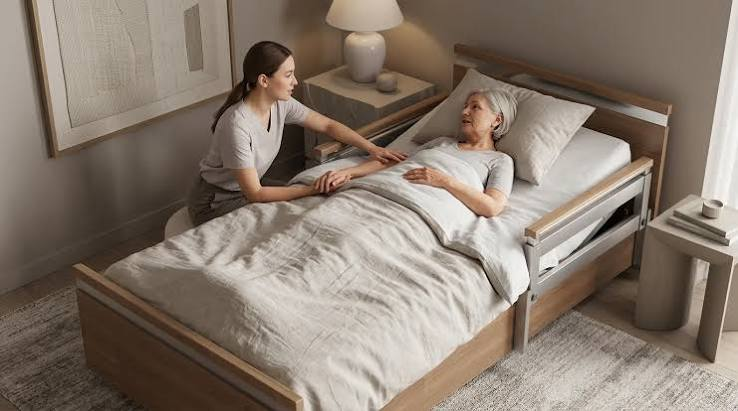
When a family member requires long-term care at home due to obesity-related health conditions, limited mobility, or post-surgical recovery, the choice of medical equipment becomes one of the most consequential decisions a household will face. Among those decisions, selecting the appropriate bed is often underestimated. Families tend to focus on nursing care schedules, medication management, or therapy appointments — and the bed itself gets treated as a secondary concern.
That gap in attention creates real problems. A bed that cannot support a patient’s weight safely, that fails to position the body correctly, or that makes caregiver assistance unnecessarily difficult can directly worsen health outcomes. Pressure injuries develop faster. Caregiver strain increases. Hospital readmissions become more likely. In a home care environment, where clinical oversight is limited compared to a facility, the equipment needs to compensate for some of that absence through reliability and function.
This guide is written for families navigating that decision in a practical, step-by-step way — from understanding what a bariatric bed actually is, to matching equipment specifications to the patient’s real circumstances, to managing the logistical realities of home delivery and room setup.
Understanding What a Bariatric Bed Is and Why It Differs from Standard Medical Beds
A bariatric bed is a medical-grade sleep and care surface engineered specifically for individuals whose body weight or physical size exceeds the structural limits of conventional hospital or home care beds. The distinction is not cosmetic. Standard home hospital beds are typically rated for patients up to a certain weight threshold, and operating them beyond that limit introduces risks that are not always visible until failure occurs — frame stress, mechanical breakdown, or mattress degradation that undermines skin integrity over time.
For families beginning their research, the Bariatric Bed guide offers a structured reference point for understanding the categories of equipment available and what differentiates them by function, construction, and appropriate use case.
What makes a bariatric bed genuinely different goes beyond a higher weight rating. These beds are built with reinforced frames, wider sleeping surfaces, more powerful actuator systems for height and position adjustment, and support structures that distribute weight more evenly across the platform. Some models also feature wider side rails, reinforced locking wheels, and motors capable of operating smoothly under sustained higher loads without overheating or slowing.
Why the Structural Difference Matters in a Home Setting
In a hospital or skilled nursing facility, equipment failure is addressed quickly. Maintenance staff are on site. Backup beds are available. In a private home, equipment failure means a patient who cannot be repositioned, a caregiver who cannot provide safe assistance, and a family scrambling to find a replacement while the patient remains in a compromised position.
A bariatric bed that is correctly matched to the patient’s size and weight eliminates most of those risks from the outset. The frame does not flex under load in ways that create noise, instability, or uneven surface support. The adjustment mechanisms respond consistently. This consistency matters more in a home setting than in almost any other care environment because no backup system exists.
Assessing the Patient’s Specific Physical and Medical Needs
Before any bed is selected, the household needs a clear picture of the patient’s current and anticipated needs. This is not about collecting a single measurement. It involves understanding several interacting factors that together determine which bed configuration will actually support daily care.
Weight capacity is the most obvious factor, but it should be evaluated with some forward margin built in. If a patient is at or near the rated limit of a particular bed, that bed is not the right choice. Equipment should be selected with room to account for weight fluctuations that can occur during recovery or long-term care. Selecting a bed that operates closer to the middle of its rated range rather than the upper edge provides a more reliable safety margin.
Mobility Level and Repositioning Requirements
How much the patient can move independently is one of the most important factors in choosing bed features. Patients with very limited mobility — who cannot reposition themselves in bed without assistance — are at elevated risk for pressure injuries, which develop when sustained pressure restricts blood flow to tissue over bony prominences.
For these patients, a bed that supports easy caregiver repositioning is essential. This means a bed that adjusts to working height so caregivers can assist without bending or straining, head and foot adjustment that allows for therapeutic positioning, and a mattress system compatible with pressure redistribution. The clinical evidence on pressure injury prevention consistently points to both surface selection and repositioning frequency as the two most controllable variables in a home care setting.
Conditions That Affect Positioning Needs
Certain medical conditions require specific positioning that a basic flatbed cannot support. Respiratory conditions, for example, may require the head of the bed to be elevated throughout the night. Edema in the lower extremities may require foot elevation. Contractures or post-surgical restrictions may limit the range of positions that are safe or comfortable.
Understanding these requirements in advance, ideally with input from the patient’s physician or home health nurse, prevents the family from purchasing a bed that cannot meet the patient’s actual positioning needs. A bed with full head, foot, and height adjustment is more expensive than a basic model, but the difference in care quality it enables is meaningful and measurable in patient comfort and caregiver workload.
Evaluating the Home Environment Before Purchase
The physical layout of the home is not an afterthought in bariatric bed selection — it is a core part of the decision. Bariatric beds are larger and heavier than standard home care beds, and they require more space not only to sit in a room but to function safely. Caregivers need clearance on at least three sides of the bed to assist with repositioning, bathing, dressing, and other daily care activities.
Doorway widths, hallway clearances, and floor load capacity all need to be verified before a bed is ordered. A wider bariatric bed may not pass through a standard doorway without removing the door or the door frame. In some homes, the bed may need to be assembled inside the room because it cannot be moved through the home intact. Delivery teams experienced with bariatric equipment will typically assess these factors, but the family should understand the constraints beforehand.
Flooring and Structural Considerations
A bariatric bed occupied by a heavier patient places significant concentrated weight on a relatively small floor area. In homes with older construction, elevated flooring over crawl spaces, or certain types of raised subflooring, this can be a structural concern. It is worth consulting a contractor or building professional if there is any doubt about floor load capacity in the room where the bed will be placed.
Flooring surface also affects equipment performance. Beds with wheels need to roll smoothly for repositioning and room adjustment. Thick carpet can impede wheel movement and make routine adjustments harder. Hard flooring with wheel locks provides a more stable and manageable surface for both the bed and caregivers working around it.
Understanding the Role of the Mattress in a Bariatric Bed System
The bed frame and the mattress function as a system, and selecting one without considering the other undermines the value of both. Many bariatric beds come with a basic mattress that meets minimum support requirements but may not be appropriate for patients who are at elevated risk for skin breakdown or who spend extended hours in bed without frequent repositioning.
Pressure-redistribution mattresses designed for bariatric use distribute the patient’s weight more evenly across the sleep surface, reducing concentrated pressure points at the heels, sacrum, and other areas where pressure injuries commonly develop. These mattresses are available in foam, gel, air, and alternating pressure configurations, each with different maintenance requirements and clinical indications.
Matching Mattress Type to Patient Risk Level
Patients who are highly mobile and spend limited time in bed may function well on a high-density bariatric foam mattress. Patients who are largely immobile, have compromised circulation, or have a prior history of pressure injuries require a more sophisticated surface. An alternating pressure or low-air-loss mattress, for example, actively changes the pressure distribution beneath the patient on a timed cycle, which mimics the effects of repositioning even when the patient cannot reposition independently.
The mattress decision should be made in consultation with a wound care nurse or the patient’s primary care provider if there is any clinical risk. Selecting the wrong surface can negate the structural benefits of an appropriate bariatric bed frame and contribute directly to avoidable complications.
Managing Insurance, Rental, and Purchase Decisions
Most families face a choice between purchasing a bariatric bed outright and renting through a durable medical equipment supplier. Each path has implications for cost, flexibility, and long-term suitability. Rental arrangements are often appropriate when the care need is temporary — post-surgical recovery, for example, with a defined endpoint. Purchase makes more sense when the patient’s condition is chronic and long-term home care is the established plan.
Medicare and Medicaid coverage for bariatric beds in the home setting is available under specific conditions and typically requires documented medical necessity from a treating physician. Private insurance policies vary significantly in their coverage terms. The administrative process for securing coverage can take several weeks, which means families should initiate the process as early as possible rather than waiting until the need is immediate.
Working with a Durable Medical Equipment Supplier
A qualified durable medical equipment supplier should be able to assess the patient’s needs, verify insurance eligibility, coordinate delivery and setup, and provide caregiver training on bed operation. The quality of this support varies between suppliers. Families should ask specifically about delivery timelines, setup assistance, and what happens if the equipment malfunctions after installation.
Suppliers with experience in bariatric equipment will also assess the home environment during delivery to confirm that the setup is safe and functional. This on-site assessment is valuable and should not be skipped or replaced with self-installation guidance.
Conclusion: Making a Decision That Supports Both the Patient and the Caregiver
Choosing a bariatric bed for home use is a decision that carries real clinical and practical weight. It affects the patient’s skin integrity, respiratory comfort, and ability to rest. It affects the caregiver’s physical safety and sustainability in a demanding role. And it affects the household’s ability to maintain a functional care environment over what may be a long period of time.
The process works best when it is treated as a structured assessment rather than a single purchase decision. Understanding the patient’s physical needs, verifying that the home environment can support the equipment, selecting a mattress that matches clinical risk, and working with a knowledgeable supplier are each necessary steps — not optional ones.
Families who take the time to work through each of these factors before committing to a purchase are significantly better positioned to provide stable, effective care at home. The right bed does not solve every challenge in home care for a bariatric patient, but the wrong one can create problems that compound everything else. Getting this decision right is one of the most direct ways a family can protect both the person in their care and the people providing it.
