

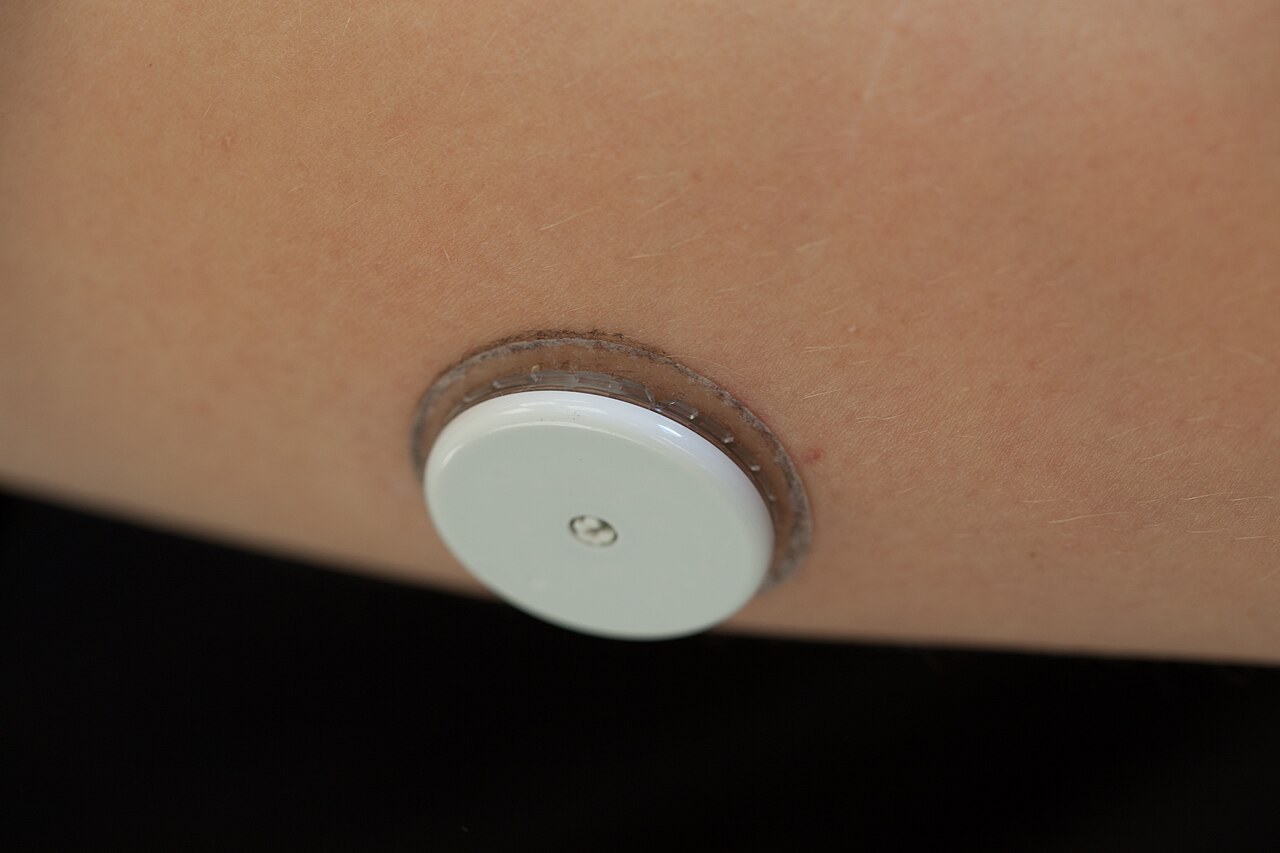
Continuous glucose monitors were once reserved for people with type 1 diabetes, but evidence that they help patients with the far more common type 2 condition is now hard to ignore. Studies report that people with type 2 diabetes who use a CGM spend around five more hours a day in a healthy blood-sugar range compared with those relying on occasional finger-prick tests. That single figure — five hours, every day — captures why clinicians, insurers and device makers are all pushing these wearable sensors into mainstream diabetes care.
What a CGM does differently
A continuous glucose monitor uses a tiny filament, worn on the arm or abdomen, to measure glucose in the fluid between cells every few minutes, day and night. The wearer — and, if they wish, their care team — can see current levels, trend arrows and patterns after meals, exercise, stress and sleep. That is a fundamentally different kind of information from a fasting finger-prick reading, which is a snapshot of a river that never stops moving. The Centers for Disease Control and Prevention estimates that diabetes affects more than 38 million Americans, most of them with type 2, and identifies sustained glucose control as central to preventing damage to the heart, kidneys, eyes and nerves.
Five more hours in range: why it matters
Clinicians measure control using “time in range” — the share of the day spent between target glucose levels. Spending five additional hours a day in range compounds powerfully over months: fewer spikes that strain blood vessels, fewer dips that cause symptoms, and typically a lower HbA1c, the long-term marker tied to complication risk. Just as important is behaviour. When people can see a walk after dinner flatten a glucose spike in real time, or watch a particular breakfast send levels soaring, they adjust — often more effectively than with general advice alone. The American Diabetes Association has progressively widened its recommendations for CGM use in type 2 diabetes as trial evidence has accumulated, including for people not using intensive insulin regimens.
Adoption is catching up with evidence
Barriers remain familiar ones: cost, coverage rules that vary by insurer and country, sensor fatigue, and the risk that a flood of data overwhelms rather than empowers some patients. Yet prices are falling, sensors are shrinking to coin-sized patches lasting two weeks, and phone apps have made readings effortless to follow. Primary-care doctors, not just specialists, are beginning to prescribe CGMs, sometimes for a single diagnostic fortnight that reveals patterns no clinic visit could. Pharmacists and diabetes educators increasingly help new wearers interpret their first weeks of data so the numbers translate into habits.
Data needs a human interpreter
Clinicians add one caution: a sensor produces data, not understanding. New wearers can be startled by normal glucose rises after meals or anxious about every fluctuation, and the technology delivers most value when someone — a diabetes nurse, pharmacist, educator or an experienced peer — helps translate traces into a small number of practical changes. Programmes that pair devices with even brief coaching consistently report better engagement than those that hand over hardware alone. As automated summaries and pattern-spotting software improve, that interpretive burden should ease, but the lesson of the rollout so far is that the winning formula is a sensor plus support, not a sensor instead of it.
A shift in how type 2 diabetes is managed
The deeper change is philosophical. Type 2 diabetes management is moving from infrequent, retrospective judgement — a quarterly blood test and a conversation about averages — to continuous, personal feedback that patients generate themselves. Five extra hours a day in range will not, on its own, cure a chronic condition, and monitors work best alongside medication, nutrition and activity. But as a practical tool that makes the invisible visible, the CGM has earned its place. The question for health systems now is less whether the technology helps, and more how quickly and fairly it can reach everyone who stands to benefit. More health technology coverage is in our health section and on the News Headlines Daily homepage.
