

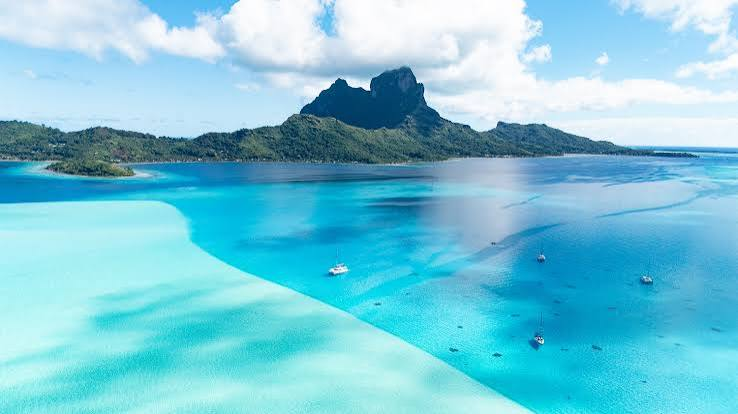
Bora Bora has long held a specific place in the minds of American travelers — not as a casual getaway, but as a deliberate, once-in-a-generation trip that requires real planning. The appeal is straightforward: an island in French Polynesia surrounded by a lagoon of striking clarity, a culture that moves at its own pace, and resort infrastructure that has been refined for decades to serve international visitors. But the gap between imagining this trip and actually executing it well is wider than most people expect.
In 2025, that gap has widened further. Flight pricing has shifted. Resort availability at premium properties tightens earlier each year. Currency considerations, transfer logistics, and package structures have all become more complex since international travel rebounded. US travelers, in particular, face unique friction points around routing, documentation, and understanding what an all-inclusive designation actually covers in a destination that operates under French administrative law and prices itself in CFP francs.
This guide is for people who are serious about planning this trip correctly — not those looking for inspiration, but those ready to make informed decisions about timing, cost structure, and what to reasonably expect from the experience.
Understanding What “All Inclusive” Actually Means in Bora Bora
All-inclusive travel in the Caribbean follows a fairly standardized model that most American travelers recognize: one flat rate covering accommodation, meals, drinks, and some activities. Bora Bora does not follow that model. The term is used differently here, and arriving with Caribbean expectations will create real frustration once you are on the island and reviewing charges at checkout.
In Bora Bora, the all-inclusive framework typically covers accommodation, breakfast, and sometimes dinner, but rarely beverages beyond basic options, and almost never water excursions, spa services, or motorized boat transfers between your overwater bungalow and the main island. These are line items. They are not small ones. A water taxi to the village of Vaitape, a snorkeling excursion to the lagoon’s coral gardens, or a sunset cruise each carries its own cost, and these are experiences that define why most people make this trip in the first place.
For anyone building a realistic budget, consulting a structured All Exclusive Trip To Bora Bora guide before committing to a package is worth the time investment — particularly one that breaks down what is bundled versus what is billed separately at the property level, since this varies significantly from resort to resort.
How Package Language Can Mislead Budget Planning
The word “exclusive” in travel package marketing frequently refers to exclusivity of the resort environment rather than the comprehensiveness of what is covered. A package described as an exclusive all-inclusive experience may mean that the property limits outside vendors on its premises, not that all your on-island spending is pre-covered. This distinction matters when you are trying to build a reliable trip budget.
The better approach is to request an itemized breakdown of what is and is not included before signing any booking agreement. Properties that hesitate to provide this in writing are signaling something about their billing transparency. Reputable operators in French Polynesia will provide this without friction.
Routing and Transit Logistics for US Travelers
There is no direct commercial flight from any US city to Bora Bora. The routing always passes through Papeete, the capital of French Polynesia located on the island of Tahiti, where travelers connect to a short domestic flight operated by Air Tahiti. This two-leg structure is not a minor inconvenience — it is a structural feature of the journey that affects packing decisions, layover planning, and what happens if a connection is missed.
Most US travelers route through Los Angeles, though connections through San Francisco also serve this corridor. The trans-Pacific leg is long, typically overnight, and the connection window in Papeete requires attention. Air Tahiti, which operates the Tahiti-to-Bora-Bora segment, runs a fixed schedule that does not accommodate missed connections the way a hub airline might. Missing the domestic connection because of a delayed international arrival can result in a full day’s delay reaching the island.
Why Overnight Layovers in Papeete Are Worth Considering
Building a buffer night in Papeete is a decision that experienced travelers to this region make without hesitation. It eliminates connection risk entirely, allows for rest before arriving at a property where you will be paying premium nightly rates, and gives you an opportunity to experience Tahiti’s capital — a city with its own distinct character that tends to be dismissed too quickly by travelers focused entirely on Bora Bora.
Papeete’s waterfront market, open early in the morning, is one of the more authentic points of contact with local Polynesian culture available to visitors. Spending one morning there before flying onward costs nothing and adds dimension to a trip that can otherwise feel entirely resort-contained.
Timing Your Trip: When Conditions and Costs Actually Align
Bora Bora sits in the South Pacific, which means its seasons are inverted relative to the Northern Hemisphere. The dry season runs roughly from May through October. This is when rainfall is minimal, humidity drops to more comfortable levels, and the lagoon visibility for snorkeling and diving is at its clearest. It is also when the majority of American travelers book, which creates real inventory pressure on overwater bungalows at well-regarded properties.
The wet season, running from November through April, brings higher humidity and periodic rainfall, but the island does not become inaccessible or unpleasant. Many experienced travelers prefer shoulder months like November or April, when pricing is meaningfully lower, crowds are thinner, and the weather, while less predictable, is still warm. The risk is rain disrupting specific excursion days, but the tradeoff often makes sense for cost-conscious travelers who are flexible about which days they spend on the water.
Booking Windows and Availability Timelines in 2025
The inventory situation at Bora Bora’s most sought-after properties has tightened over the past two years. Properties that previously allowed bookings six months out with reasonable availability are now seeing their prime dates fill within weeks of opening the booking window for high-season dates. For travel planned during June, July, or August of 2025, the realistic booking window opened in late 2024 for overwater bungalows at properties with strong reputations.
This is not manufactured scarcity. It reflects a straightforward supply constraint: the island’s geography limits how many overwater bungalow units can physically exist, and demand from multiple international markets — including Australia, Japan, and Europe alongside the US — competes for that fixed inventory year-round.
Currency, Payments, and Financial Realities on the Island
French Polynesia uses the CFP franc, a currency pegged to the euro and issued under the framework of French Pacific territories. As noted by the International Monetary Fund, Pacific franc territories operate under currency arrangements that differ substantially from open-market currencies, which affects how exchange rates behave relative to the US dollar. For American travelers, this means that rate fluctuations against the euro indirectly influence what they pay in real terms for goods and services priced in CFP francs.
Credit cards are accepted at resorts and larger establishments, but smaller vendors, market sellers, and inter-island ferry operators frequently work in cash. Carrying a reasonable amount of local currency obtained in Papeete — where ATM availability and exchange options are better than on Bora Bora itself — is practical rather than optional.
What Gratuity Norms Look Like in French Polynesia
Tipping is not a cultural norm in French Polynesia the way it is in the United States. Service charges are built into most resort billing. Offering a tip is not considered rude, but it is also not expected, and staff are not relying on gratuities to supplement wages. American travelers who reflexively tip at American rates will not cause offense, but should not feel that failing to tip is a social misstep. Understanding this removes an anxiety that some visitors carry unnecessarily throughout the trip.
What to Prioritize When Evaluating Resorts
Not every overwater bungalow in Bora Bora offers equivalent access to the lagoon’s most photogenic water. The lagoon is large, and properties are positioned at different points around its perimeter. Some sit closer to the reef edge where water color and depth are most dramatic; others are positioned closer to the main island where the water is shallower and the view less open. This geographic reality is rarely explained clearly in marketing materials, but it is a meaningful factor in the experience.
When evaluating a property, requesting specific information about which direction the bungalows face, what the water depth is at your unit’s deck, and how far the nearest reef structure is from the accommodation will tell you more than any promotional description. Properties with strong guest relations teams answer these questions specifically. Those that deflect to general descriptions of the lagoon’s beauty are not giving you what you need to make an informed choice.
Transfer Logistics Between Properties and the Main Island
Every resort on Bora Bora sits on a motu — a small coral islet separated from the main island by the lagoon. Getting anywhere beyond your resort requires a boat transfer. Some resorts provide scheduled shuttle service to the main island at fixed times. Others operate on-demand transfers that carry per-trip charges. Understanding which model your chosen property uses, and whether transfer costs are bundled into your package or billed as incidentals, directly affects both your daily logistics and your final bill.
Closing Thoughts on Planning This Trip Well
An all-inclusive trip to Bora Bora is not a complicated trip to enjoy, but it is a complicated trip to plan well. The distance from the US mainland, the layered cost structure of French Polynesian resorts, the fixed inventory constraints of overwater accommodations, and the specific logistics of island-to-island travel all require more active pre-trip research than most domestic or Caribbean travel demands.
What separates a trip that meets expectations from one that falls short is almost never the island itself — Bora Bora consistently delivers on its reputation as a destination. The gap is almost always in planning: misread package inclusions, underestimated transit complexity, misjudged booking timelines, or overlooked financial logistics that create friction during what should be an uncomplicated stay.
Travelers who invest time in understanding the operational specifics before they book — what is covered, what is not, when to go, how to get there, and which property positions them best on the lagoon — tend to report experiences that match and occasionally exceed what they anticipated. Those who treat it like a standard resort booking tend to encounter surprises that better preparation would have prevented. The island is ready for you. The question is whether your planning is ready for the island.
