

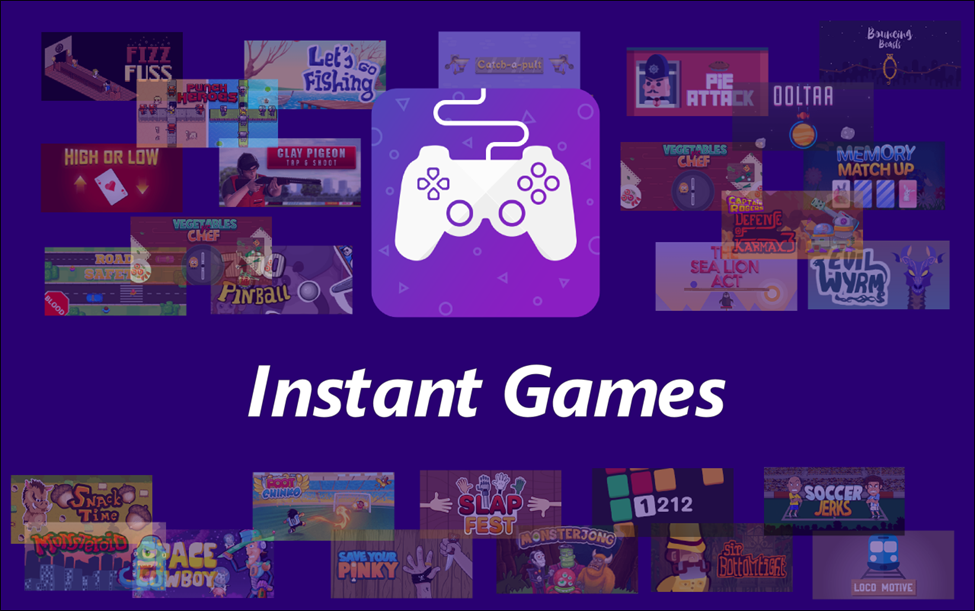
Instant games didn’t “replace” traditional gaming. They simply slipped into the gaps of everyday life and claimed territory there. Five minutes waiting for coffee. A dull commute. That awkward stretch between meetings when starting anything serious feels pointless.
That’s exactly why hubs like tamasha app instant games to play online make sense to so many players. The pitch is simple: get in, play, get out. No long installs, no update roulette, no pretending there’s time for a full-blown session.
Mobile fits the way people actually play now
The biggest reason players lean mobile isn’t technology. It’s behavior.
Most people aren’t sitting down thinking, “Time to game.” They’re reaching for a phone because it’s already in hand. Mobile is the default screen. It’s the one device that’s always nearby, always charged enough (usually), always connected to something.
Instant games match that rhythm. Short sessions don’t feel like a compromise on a phone. They feel normal.
No downloads, no waiting, no patience required
Mobile players have a low tolerance for friction, and honestly, fair enough. If an instant game takes too long to load, it stops being “instant” and starts being annoying.
What players like is the clean chain of events:
Open → tap → play.
Not:
Search → install → accept permissions → wait for download → wait for update → create account → verify email → finally play.
That second path kills curiosity. The first one feeds it.
Touch controls make quick games feel natural
Mobile has a built-in advantage: touch is immediate. No controller pairing. No mouse. No “what key does what?” drama.
Instant games tend to be designed around taps, swipes, quick decisions, repeatable loops. On mobile, that’s effortless. One thumb can do the whole job. And when a game is meant to be played in short bursts, one-thumb design isn’t just a nice feature. It’s the whole point.
Also, modern phones do haptics well. A small vibration at the right moment makes simple gameplay feel punchier than it should. Tiny detail, big psychological payoff.
Better hardware means smoother “cheap” fun
A lot of instant games used to look and feel… flimsy. That era is fading.
Even mid-range phones now have enough power to run slick animations, clean transitions, and responsive gameplay without cooking the battery in five minutes. High refresh rate screens help too. Once someone gets used to 90Hz or 120Hz scrolling, stuttery gameplay feels broken, even if it technically works.
So instant games aren’t just more available on mobile. They’re better on mobile than they used to be, and players notice.
Mobile is built for interruptions
A console session assumes continuity. Mobile life doesn’t.
People get notifications. Calls. Low battery warnings. Someone asks a question. The bus arrives. A meeting starts early. Mobile gaming is constantly interrupted, and instant games are basically designed for that chaos.
The best instant games don’t punish players for stepping away. They keep rounds short, outcomes quick, re-entry easy. Drop in, drop out, return later without feeling lost. That’s a huge reason players prefer mobile: it doesn’t demand perfect conditions.
Discovery is easier when the game is already in the pocket
On desktop, players often search for something specific. On mobile, discovery is more impulsive. A banner, a recommendation, a “recently played” tile. Two taps and it’s happening.
Instant games benefit from that casual browsing style. Mobile apps can surface options quickly:
- “Play again” buttons that actually make sense
- Simple categories (fast, trending, new)
- Recently played lists that save time
- Favorites that don’t get buried
Desktop can do this too, sure. But mobile is where the habit lives. The phone is where people go to fill dead air, and instant games are basically dead-air specialists.
Payments and logins got smoother, so trying feels safer
Whether it’s real-money games or just casual titles with in-app purchases, the mobile ecosystem has made payment flows feel more normal.
Biometric login, saved payment methods, app-level security prompts. It reduces the sketch factor. People might not articulate it, but they feel the difference between “this is a standard mobile checkout” and “why am I typing card details into a weird form?”
For instant games, trust is everything. New players won’t sit through confusion. They’ll just leave.
Connectivity got more stable, not just faster
Everyone talks about 5G like it’s the hero. But instant gaming doesn’t need rocket-ship download speeds as much as it needs stability.
Mobile networks are better at staying connected while moving, switching between Wi-Fi and data, and recovering quickly after small dropouts. That matters because instant games are often played in messy real-world environments: trains, cafés, elevators, parking lots.
A game that survives those conditions wins loyalty. One that freezes at the wrong moment gets deleted. It’s brutal, but that’s the market.
Instant games feel more social on mobile
Mobile is where people share things without thinking. Screenshots, quick links, “try this,” “look at this win,” “this is ridiculous.” Even when the game itself isn’t deeply social, the device is.
Instant games ride that wave because they’re easy to recommend. Nobody’s asking a friend to download a massive title and commit a weekend. They’re saying: “Play a quick round. It’s fun.”
Short commitment makes sharing frictionless. And that’s how player bases grow quietly, one message at a time.
Players like the control: fast entertainment with an off switch
There’s something psychologically comforting about instant games on mobile: they feel contained.
A quick game is a small choice, not a lifestyle. It doesn’t come with the mental weight of “getting into” something. And on a phone, it’s easy to shut it down the second it stops being fun.
That sense of control matters. In a world where everything fights for attention, an entertainment option that doesn’t demand loyalty feels oddly refreshing.
The flip side: instant can turn into endless
Worth saying, even briefly: instant games are designed to be repeatable. That’s the engine. Quick rounds, quick rewards, quick replays.
On mobile, that loop can get sticky because the phone is always there. Some apps handle this responsibly with clear limits and settings. Others lean hard into nudges, timers, and “one more” mechanics. Players are getting sharper about spotting the difference.
Still, the preference remains. Convenience usually wins.
The simple conclusion: mobile makes “instant” feel honest
Players prefer instant games on mobile devices because mobile is where instant makes sense. The phone is already present, already personal, already suited to short bursts of entertainment. Add modern performance, smoother UX, easier discovery, and safer-feeling payments, and it’s not hard to see why people keep choosing the small, quick option.
Not every session needs to be epic. Sometimes it just needs to start fast, feel good, and end on the player’s terms. Mobile delivers that better than anything else right now.
