

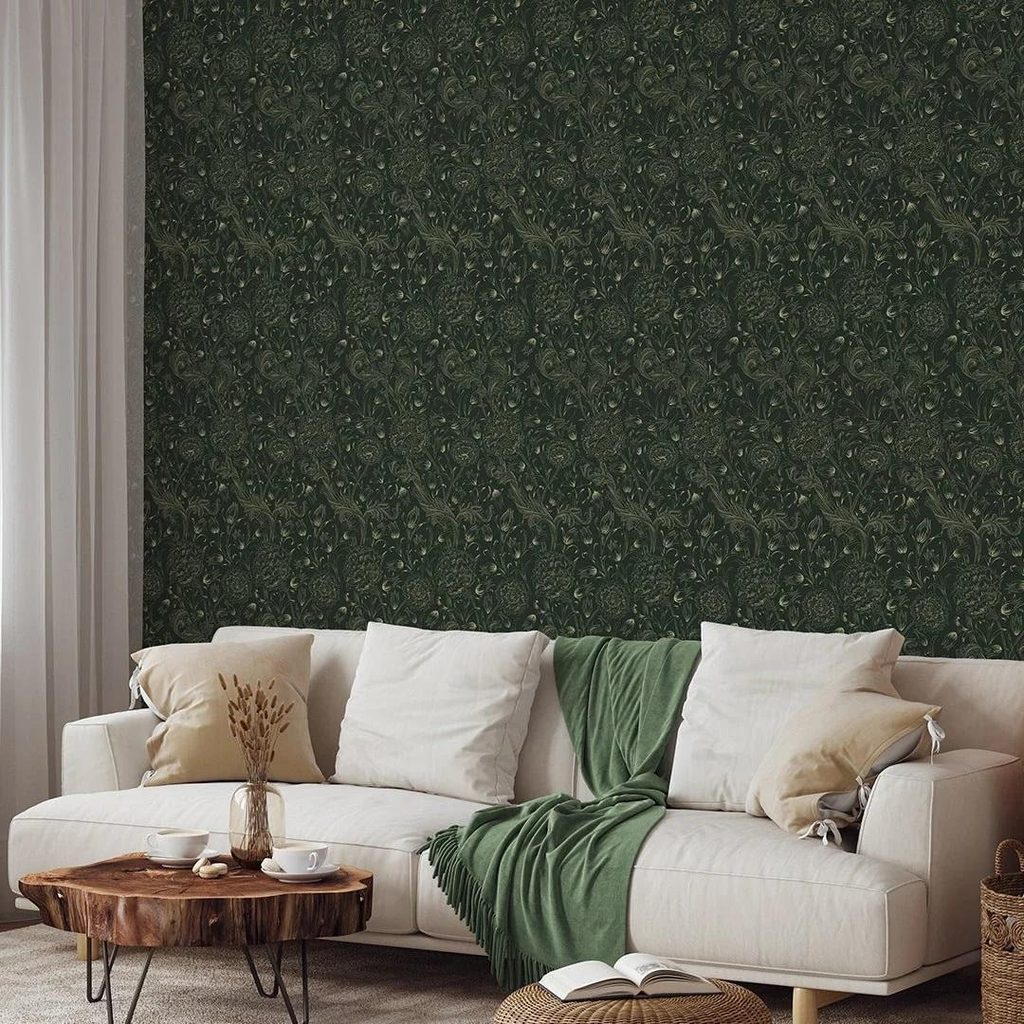
A sophisticated interior doesn’t necessarily require expensive furniture or elaborate decoration. Color, pattern, and a few carefully selected materials can completely change how a room feels. Deep green is particularly effective because it combines the richness of a dark shade with the natural character of green. Dark green wallpaper can create an elegant background for bedrooms, living rooms, dining areas, and home offices while remaining surprisingly versatile when paired with the right colors and materials.
For a more decorative approach, geometric patterns inspired by Art Deco can introduce structure and a sense of glamour. Both styles can work beautifully in modern homes without making the interior feel overly formal or old-fashioned.
Why Dark Green Works So Well in Interiors
Dark green has many of the advantages of traditional dark neutrals such as navy, charcoal, and brown, but it often feels softer because of its connection to nature.
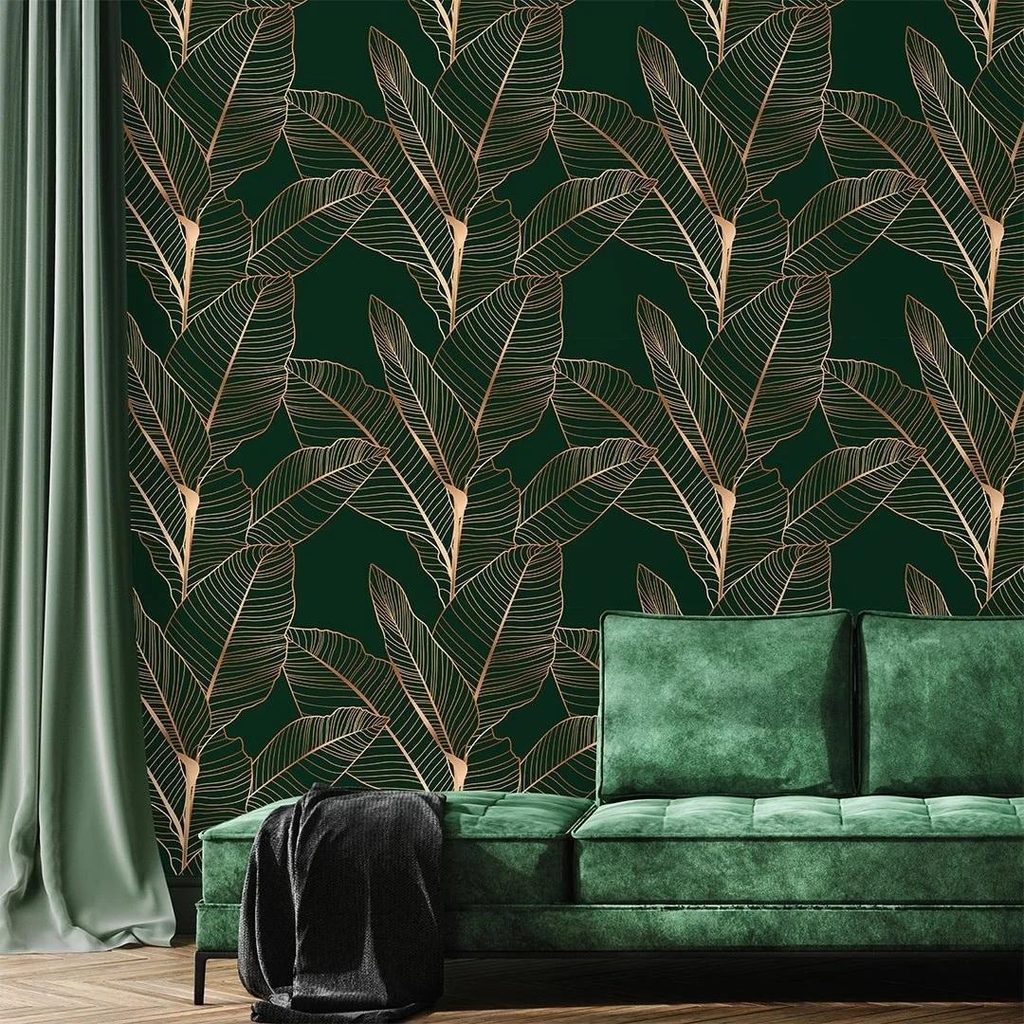
Forest green, emerald, deep olive, and other darker variations can create very different moods depending on their surroundings.
Combined with cream and light wood, green can feel calm and contemporary. With walnut, velvet, and brass, the same shade becomes richer and more dramatic.
This flexibility makes dark green a useful choice when you want to introduce a strong color without building the entire room around a very bright palette.
Use Dark Green as a Focal Point
If you’re hesitant to use a deep color throughout a room, start with one wall.
In a bedroom, dark green works particularly well behind the headboard. In a living room, it can define the wall behind a sofa or fireplace. Dining rooms and home offices can usually accommodate even more dramatic applications.
An accent wall also makes it easier to balance the darker shade with lighter surrounding surfaces.
Cream, beige, warm gray, and off-white walls can provide contrast, while wood furniture prevents the room from feeling cold.
If the wallpaper includes a pattern rather than a solid-looking design, keep some of the larger furniture pieces relatively simple so the wall remains the main feature.
Introduce Art Deco Through Pattern
Color isn’t the only way to create a sophisticated interior. Pattern can provide just as much character.
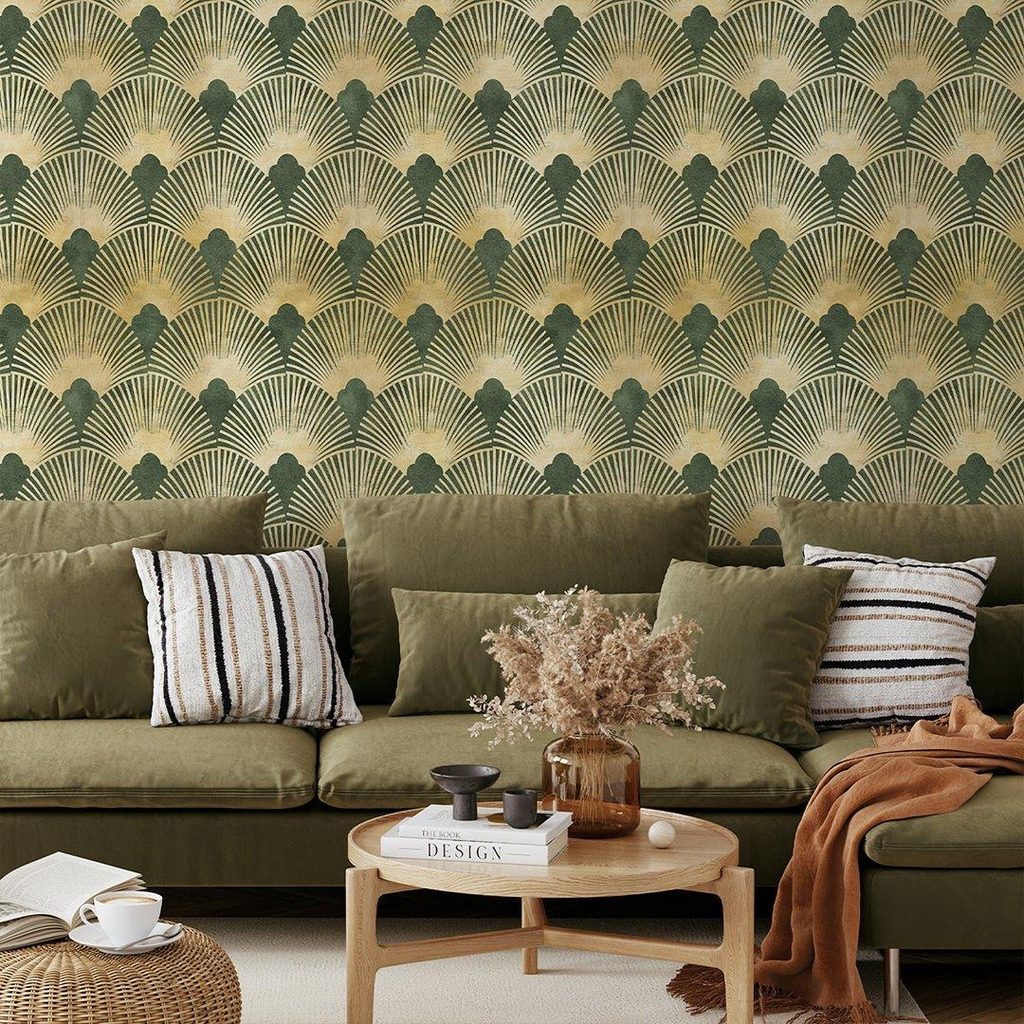
Geometric Art Deco wallpaper is especially effective when you want a room to feel structured and decorative. Repeated arches, fan shapes, lines, diamonds, and other symmetrical motifs can turn a relatively simple wall into a strong design element.
Art Deco doesn’t have to mean recreating a 1920s interior.
A geometric wallpaper can be paired with contemporary furniture, simple upholstery, and modern lighting. The contrast between decorative walls and streamlined furniture often makes the historical influence feel more current.
Combine Green With Warm Neutrals
One of the easiest ways to make dark green feel elegant rather than heavy is to combine it with warm neutrals.
Cream, ivory, beige, taupe, and soft greige provide visual relief while maintaining a sophisticated palette.
For example, a dark green wall behind a cream sofa creates immediate contrast. In a bedroom, beige or ivory bedding can soften a deep wallpaper without taking away its dramatic character.
These combinations also leave room for stronger accent materials such as dark wood or brass.
Add Wood for Warmth
Natural wood is one of the most reliable companions for dark green and decorative wallpaper.
Light oak provides stronger contrast and creates a more contemporary effect. Walnut and medium-toned woods produce a richer look that works particularly well with deeper colors.
Wood can be introduced through flooring, dining tables, bedside furniture, shelving, or picture frames.
You don’t need every wooden element to match exactly. Slight variation in tone can make the room feel more natural and layered.
Use Metallic Details Carefully
Art Deco interiors are frequently associated with gold and brass, but modern spaces rarely need large amounts of metallic decoration.
Small details are usually enough.
A brass floor lamp, mirror frame, cabinet handles, or side table can stand out beautifully against dark green or geometric wallpaper.
If you prefer a cooler aesthetic, chrome or silver-toned details can create a sharper, more contemporary effect.
The key is restraint. Metallic accents should catch the light and complement the wallpaper rather than become another dominant feature.
Balance Strong Wallpaper With Simple Furniture
A common mistake with decorative interiors is allowing every element to compete for attention.
If the wallpaper has a strong geometric pattern or deep color, choose some quieter pieces for balance.
A simple upholstered bed, streamlined sofa, solid curtains, or plain rug provides visual space around a statement wall.
This doesn’t mean the room needs to be minimalist. You can still introduce artwork, lamps, cushions, and decorative objects, but they should support the main design rather than repeat every color and motif.
Create an Elegant Bedroom
Dark green and Art Deco influences work particularly well in bedrooms.
A deep green wallpaper behind the bed can make the room feel intimate and calm. Add light bedding, wooden bedside tables, and warm lamps to balance the darker background.
For a more decorative look, use geometric wallpaper as the main feature and keep the headboard and textiles relatively simple.
Velvet can be a useful accent material, but it doesn’t need to dominate the room. A chair, cushion, or upholstered headboard is often enough to add softness.
Bring More Drama Into the Dining Room
Dining rooms can handle stronger colors and patterns because a more atmospheric environment often works well in these spaces.
Dark green walls paired with wood furniture and warm lighting can create an intimate setting, particularly in the evening.
Art Deco patterns offer another way to add drama. A geometric accent wall behind the dining table or sideboard can provide enough decoration that very little additional wall art is needed.
A mirror or simple lighting fixture can complete the space without making it feel overly themed.
Don’t Forget About Lighting
Dark colors and detailed patterns change significantly depending on lighting.
Natural daylight helps reveal color variation, while warm artificial lighting can emphasize green, wood, and brass tones in the evening.
Instead of relying entirely on one ceiling fixture, use several light sources. Table lamps, floor lamps, sconces, and pendant lighting create different areas of brightness and make the room feel more layered.
This is especially important when using darker wallpaper, which naturally absorbs more light than pale walls.
Final Thoughts
Dark green and Art Deco-inspired patterns offer two effective ways to make an interior feel more sophisticated. Deep green introduces richness and natural warmth, while geometric patterns bring structure and decorative character. Both work best when balanced with warm neutrals, wood, thoughtful lighting, and relatively simple furniture.
If you’re considering either style, explore the dark green and Art Deco wallpaper collections from CostaCover. Comparing different shades and patterns can help you find a design that adds character while still working naturally with the rest of your interior.
