

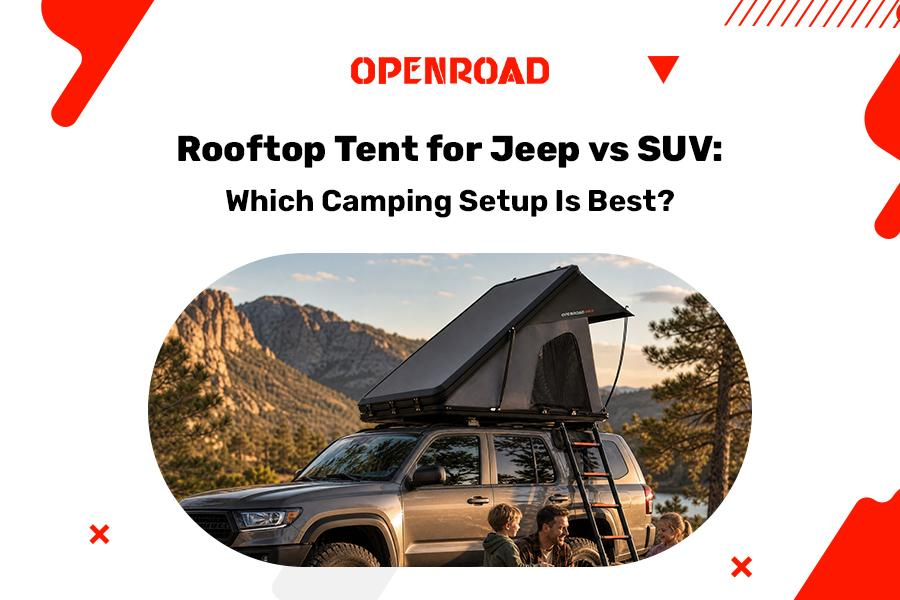
Upgrade your vehicle with an elevated sleeping system to transform your outdoor vacations. A car roof top tent provides a flat, comfy mattress anyplace you can park, above the mud, rocks, and prowling animals.
Your base vehicle greatly affects how well that tent operates on the trail. SUVs and Jeeps handle weight, dynamic movement, and trail obstructions differently. Your travel habits, gear capacity, and terrain choices will determine whether you choose a rooftop tent for Jeep or SUV.
The Off-Road Crawler: Installing a Rooftop Tent for Jeep Off-Grid Trips
Wranglers and Gladiators are designed for tough trails. They can crawl deep into the wilderness where regular cars cannot due to their short overhangs, sturdy axles, and high ground clearance. Adding a heavy-duty jeep rooftop tent makes the ultimate mobile camp.
Weight Distribution and Trail Center of Gravity
Jeeps are taller, boxier, and narrower, so placing weight up high requires careful design. The OPENROAD family of hard-shell aluminum cars reduces highway wind drag with low-profile aerodynamic features. Keeping the tent’s static and dynamic weight balanced avoids body roll on steep off-camber crawls on tough tracks.
Roof Rack and Gutter Mount Considerations
Classic Wranglers use gutter mounts, exo-cages, and bed-rack systems (on Gladiators), unlike unibody cars. For safety, your rack system must hold both dynamic weight (while driving) and static weight (when sleeping).
Highway & Family Cruiser: SUV Rooftop Tent Mounting

Toyota 4Runners, Land Cruisers, Ford Broncos, and Subaru Outbacks have smooth independent suspension, spacious load room, and steady high-speed highway performance. A rooftop tent for an SUV makes a comfy long-distance road trip machine.
Space, Footprint, Passenger Comfort
SUVs usually have longer rooflines and wider crossbars. You can attach larger soft-shell fold-out models or extra-wide hard shells without overhanging the front windshield with this extra roof space. When traveling with family, pets, or extra gear, an SUV roof rack can fit large car top tents for camping, side-mounted awnings, recovery boards, and solar installations.
Highway Stability and Fuel Efficiency
SUVs benefit from independent front suspension and broader wheelbases on long interstate rides to the trailhead. Slim, low-profile hardshell tents reduce wind noise and enhance fuel economy over hundreds of highway miles.
Setup Comparison: Which Fits Your Style?
Assess your weekend routine to determine the optimum car roof tent camping setup:
Choose a Jeep Setup If: Extreme off-roading, rock crawling, and remote campsites are your priorities. It must be compact and strong enough to endure low-hanging branches and harsh vibration.
Choose an SUV Setup If: You value highway comfort, multi-passenger cargo space, and easy setup at established or dispersed campsites. A larger sleeping footprint without losing high-speed stability.
Maximizing Your Car Top Camping Tents
Setting up your vehicle properly maximizes camp comfort, whether you attach your tent to an off-road Jeep or a multipurpose family SUV.
Level your car before opening the tent. Traction boards or leveling blocks under your tires prevent sleeping on an incline. Second, match your tent’s weight to heavy-duty overland aluminum crossbars. Finally, add a modular side awning to your elevated sleeping room for undercover cooking and gear changes.
Matching the correct camping tent for car systems to your vehicle’s structural strengths will make every weekend trip easy.
